






body roundness index
Image

Body Roundness Index (BRI)

If You Like Our Body Roundness Calculator, You'll LOVE Our APP! Now Available for iOS.

*In-app Purchases

Image
Image

Body Roundness Index (BRI)

If You Like Our Calculator, You'll LOVE Our APP! Now Available for iOS.

*In-app Purchases

AccuHealth's BRI Calculator is Simply Better!

Earlier Detection, Deeper Insight, Better Outcomes

AccuHealth’s HIPAA-compliant Body Roundness Index (BRI) App goes far beyond the standard BRI calculator. While traditional tools only factor in waist and height, our advanced platform also incorporates age, gender, race, weight, and hip circumference—delivering a more complete picture of your health.


AccuHealth's BRI Calculator is Simply Better!

Earlier Detection, Deeper Insight, Better Outcomes

AccuHealth’s HIPAA-compliant Body Roundness Index (BRI) App goes far beyond the standard BRI calculator. While traditional tools only factor in waist and height, our advanced platform also incorporates age, gender, race, weight, and hip circumference—delivering a more complete picture of your health.


Image

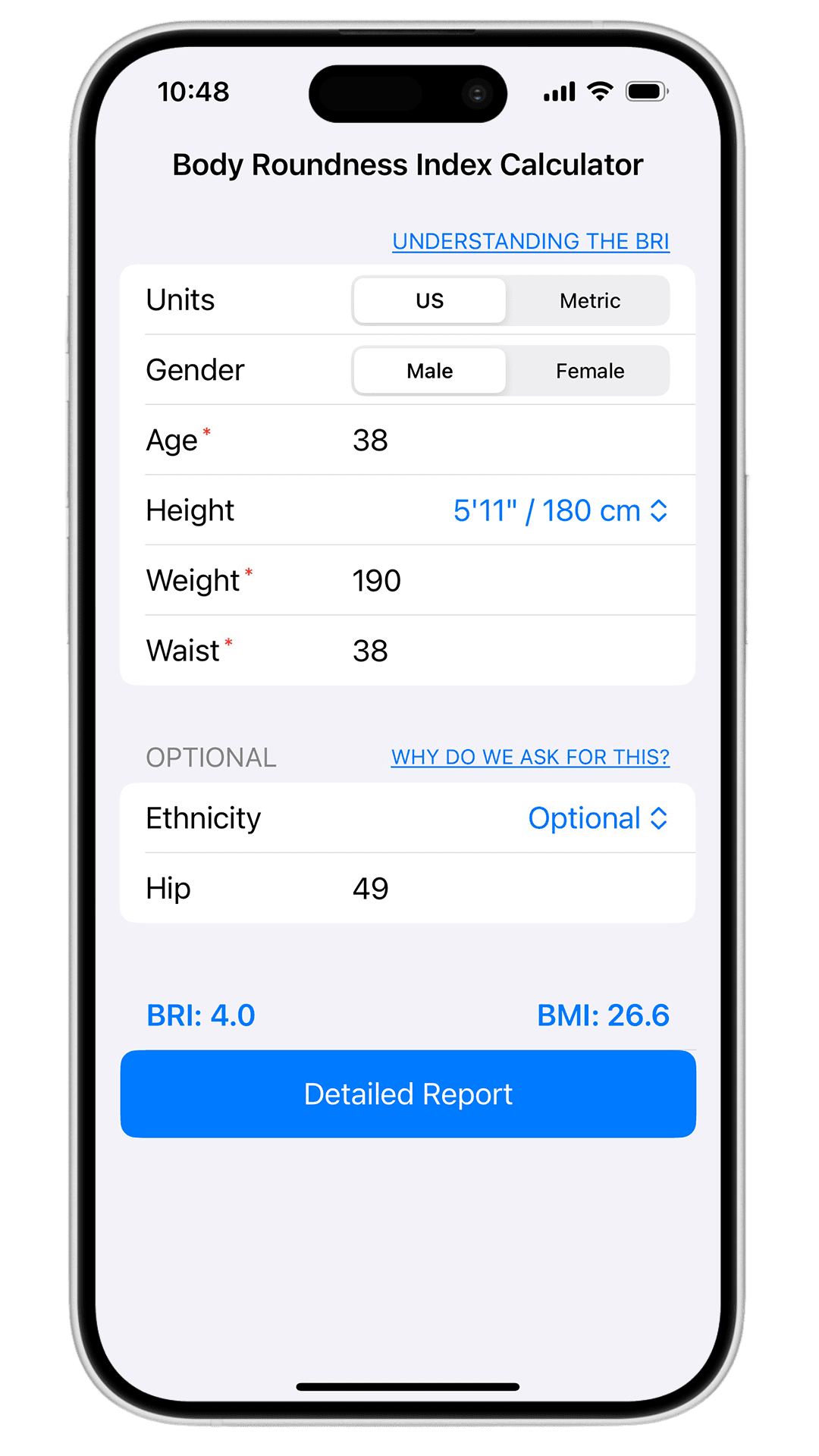
Step 1. Enter Key Measurements

Record essential data including gender, age, height, weight, and waist circumference. For enhanced accuracy, adding ethnicity and hip circumference is strongly recommended. These inputs improve the precision of predicted body fat percentage and visceral adipose tissue (VAT), offering a deeper assessment of metabolic risk without invasive testing.

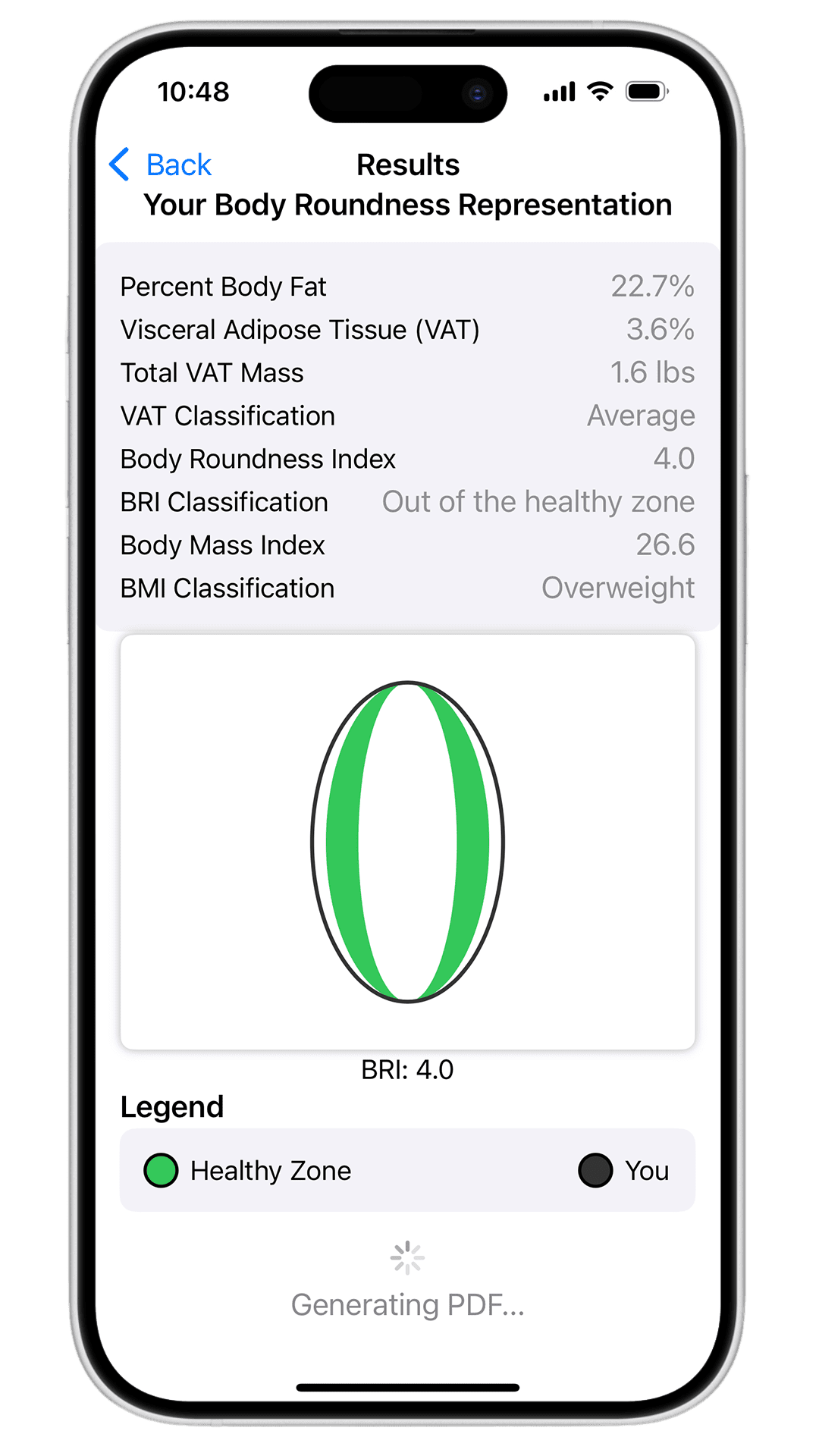
Step 2. Review Instant Results

The app generates an immediate, clinically relevant visualization. Your body shape (black) is displayed against a healthy reference range (green), alongside calculated values for BRI, body fat percentage, and VAT. BRI scores range from 1 (narrow) to 20 (rounder body shape), with higher values correlating to greater visceral fat—an established predictor of cardiometabolic disease.

Image
Image

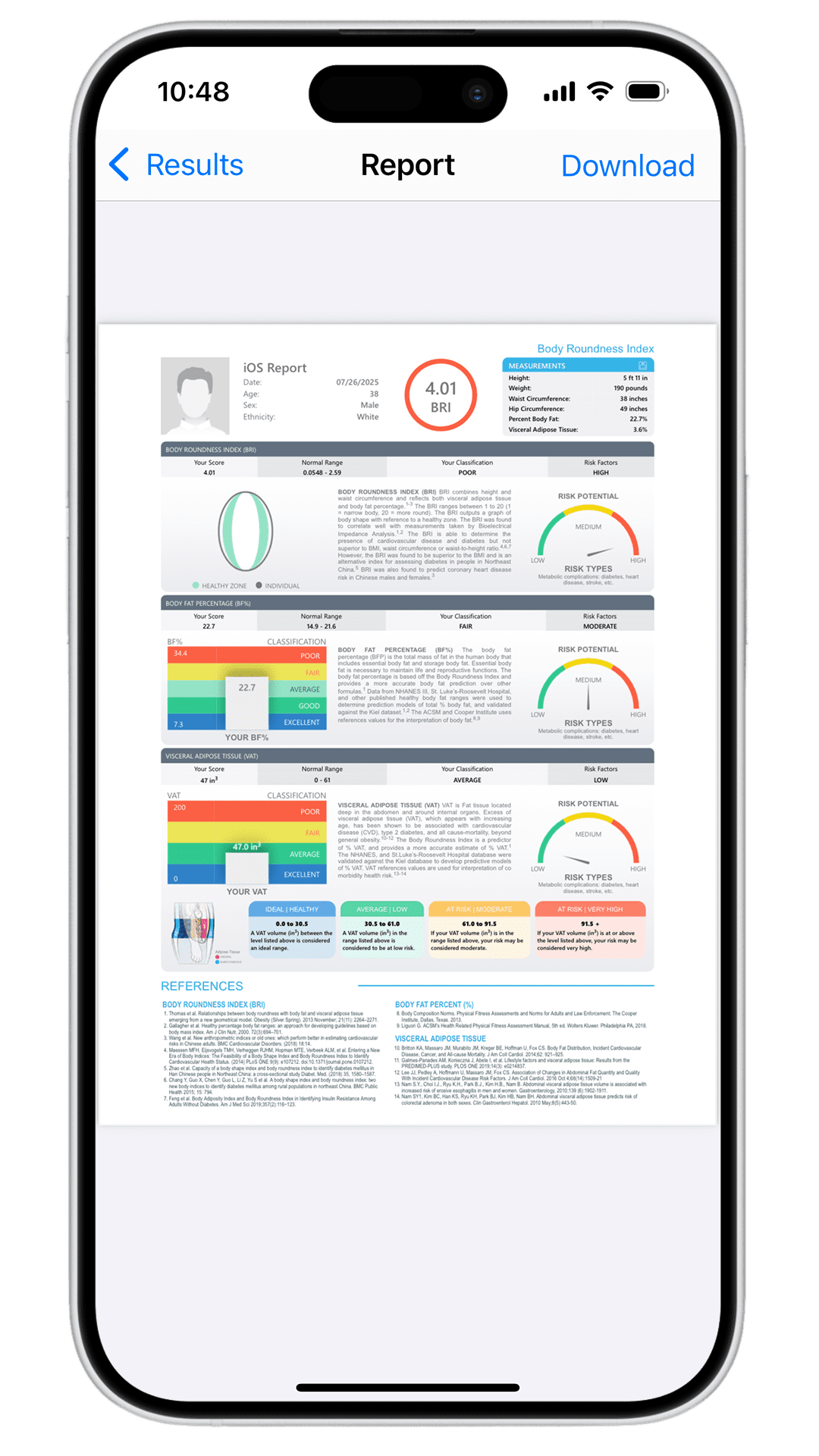
Step 3. Download the Detailed Report*

An optional report provides a comprehensive breakdown, including quantified risk factors for Body Roundness Index (BRI), Body Fat Percentage (BF%), and Visceral Adipose Tissue (VAT). Reports can be securely shared with healthcare providers or trainers and serve as a valuable record for tracking progress, monitoring interventions, and guiding long-term care.

Download a Sample Report
Image

Step 1. Enter Key Measurements

Record essential data including gender, age, height, weight, and waist circumference. For enhanced accuracy, adding ethnicity and hip circumference is strongly recommended. These inputs improve the precision of predicted body fat percentage and visceral adipose tissue (VAT), offering a deeper assessment of metabolic risk without invasive testing.

Image

Step 2. Review Instant Results

The app generates an immediate, clinically relevant visualization. Your body shape (black) is displayed against a healthy reference range (green), alongside calculated values for BRI, body fat percentage, and VAT. BRI scores range from 1 (narrow) to 20 (rounder body shape), with higher values correlating to greater visceral fat—an established predictor of cardiometabolic disease.

Image

Step 3. Download the Detailed Report*

An optional report provides a comprehensive breakdown, including quantified risk factors for Body Roundness Index (BRI), Body Fat Percentage (BF%), and Visceral Adipose Tissue (VAT). Reports can be securely shared with healthcare providers or trainers and serve as a valuable record for tracking progress, monitoring interventions, and guiding long-term care.

Download a Sample Report

Why BRI Matters

The BRI is increasingly vital in today’s clinical landscape because it goes beyond outdated metrics like BMI to more accurately capture central adiposity—the true driver of cardiometabolic disease¹. By focusing on waist-derived measures, BRI provides a clearer window into visceral fat burden, a predictor strongly tied to diabetes, cardiovascular disease, stroke, and premature mortality². As obesity patterns shift and metabolic disorders rise globally, BRI offers a fast, non-invasive, and cost-effective tool for stratifying risk, guiding interventions, and monitoring outcomes³. Looking ahead, its ability to detect risk earlier and track change over time positions BRI as a cornerstone in preventive care and population health management⁴.

Superior to BMI


By including waist circumference, BRI provides a more accurate reflection of visceral fat than BMI, which cannot distinguish fat from muscle⁵.

Predicts Health Risks


Higher BRI scores are strongly linked to greater risk of cardiovascular disease and type 2 diabetes⁶.

U-Shaped Mortality Risk


Research shows a U-shaped link between BRI and mortality, with both low and high scores tied to higher death rates⁷.

Early Risk Indicator


BRI highlights visceral fat changes early, giving clinicians a chance to intervene before serious disease develops⁸.

References
1. Thomas DM, Bredlau C, Bosy-Westphal A, et al. Relationships between body roundness with body fat and visceral adipose tissue emerging from a new geometrical model. Obesity (Silver Spring). 2013;21(11):2264–2271.
2. Ashwell M, Gibson S. Waist-to-height ratio as an indicator of ‘early health risk’: simpler and more predictive than using a ‘matrix’ based on BMI and waist circumference. BMJ Open. 2016;6(3):e010159.
3. Maessen MF, Eijsvogels TM, Verheggen RJ, et al. Entering a new era of body indices: the feasibility of a body shape index and body roundness index to identify cardiovascular health status. PLoS One. 2014;9(9):e107212.
4. Nevill AM, Duncan MJ. Establishing a standard for body roundness index as an alternative to body mass index for predicting metabolic risk in adults. BMC Public Health. 2020;20:1244.
5. Thomas DM, Bredlau C, Bosy-Westphal A, et al. Obesity (Silver Spring). 2013;21(11):2264–2271.
6. Maessen MF, Eijsvogels TM, Verheggen RJ, et al. PLoS One. 2014;9(9):e107212.
7. Chang Y, Guo X, Chen Y, et al. A body shape index and body roundness index: two new body indices to identify metabolic syndrome among Chinese adults. BMJ Open. 2015;5(12):e008561.
8. Nevill AM, Duncan MJ. BMC Public Health. 2020;20:1244.