

Caregiver assisting elderly person indoors.

Fall Risk Assessment (FRA) Software

Next-Gen Fall Risk Assessments– Next Generation Simplicity!

Schedule a Demo
Image

Fall Risk Assessment (FRA) Software

Next-Generation Fall Risk Assessments– Next Generation Simplicity!

Schedule a Demo

Rapid Grading and Early Detection for Better Outcomes

Identify risks early and guide interventions.

AccuHealth’s Fall Risk Assessment software streamlines the process of identifying and grading a patient’s likelihood of future falls. By combining evidence-based questionnaires with performance measures, the platform helps clinicians quickly uncover modifiable risk factors and create targeted prevention plans. Early detection through AccuHealth ensures providers can intervene before risks escalate, leading to fewer adverse events, improved patient safety, and stronger long-term outcomes.


Rapid Grading and Early Detection for Better Outcomes

Identify risks early and guide interventions.

AccuHealth’s Fall Risk Assessment software streamlines the process of identifying and grading a patient’s likelihood of future falls. By combining evidence-based questionnaires with performance measures, the platform helps clinicians quickly uncover modifiable risk factors and create targeted prevention plans. Early detection through AccuHealth ensures providers can intervene before risks escalate, leading to fewer adverse events, improved patient safety, and stronger long-term outcomes.


Fall Risk Assessment Step One

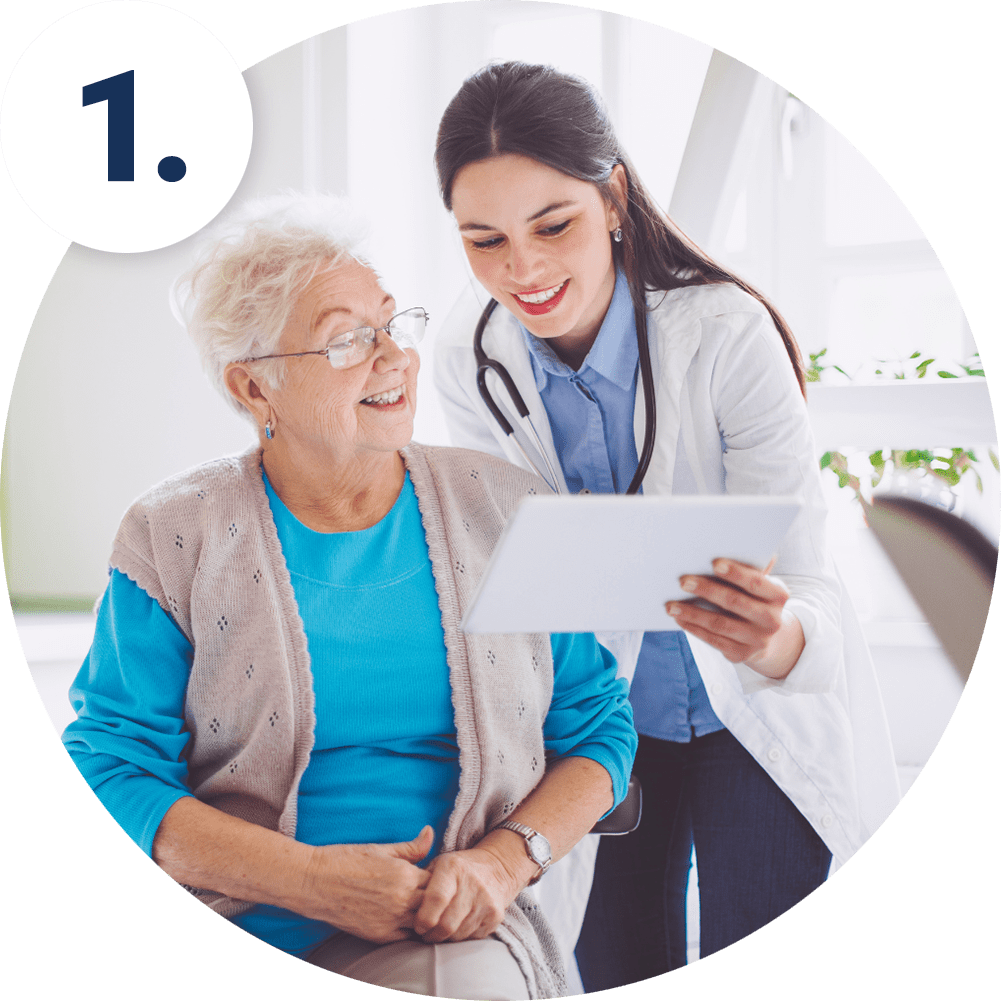
Step 1. Answer Pre-Screen & Medical History Questions

The patient’s vital signs are recorded, and five targeted medical questions are answered to help clinicians quickly determine whether the individual is ready for a full fall risk assessment. This initial screening ensures the assessment is safe and appropriate while providing early insights into potential risk factors.

Fall Risk Assessment Step One

Step 1. Answer Pre-Screen & Medical History Questions

The patient’s vital signs are recorded, and five targeted medical questions are answered to help clinicians quickly determine whether the individual is ready for a full fall risk assessment. This initial screening ensures the assessment is safe and appropriate while providing early insights into potential risk factors.

Image

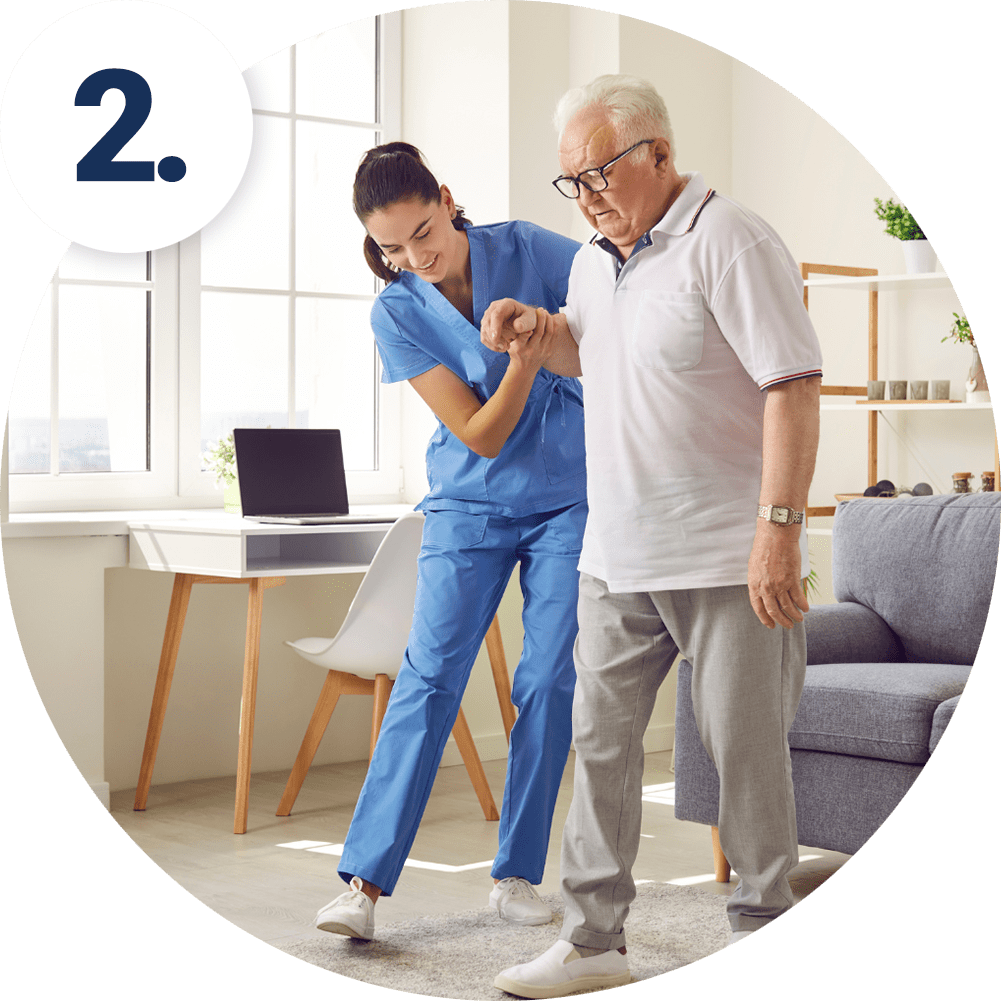
Step 2. Complete Questionnaires and Performance Tests

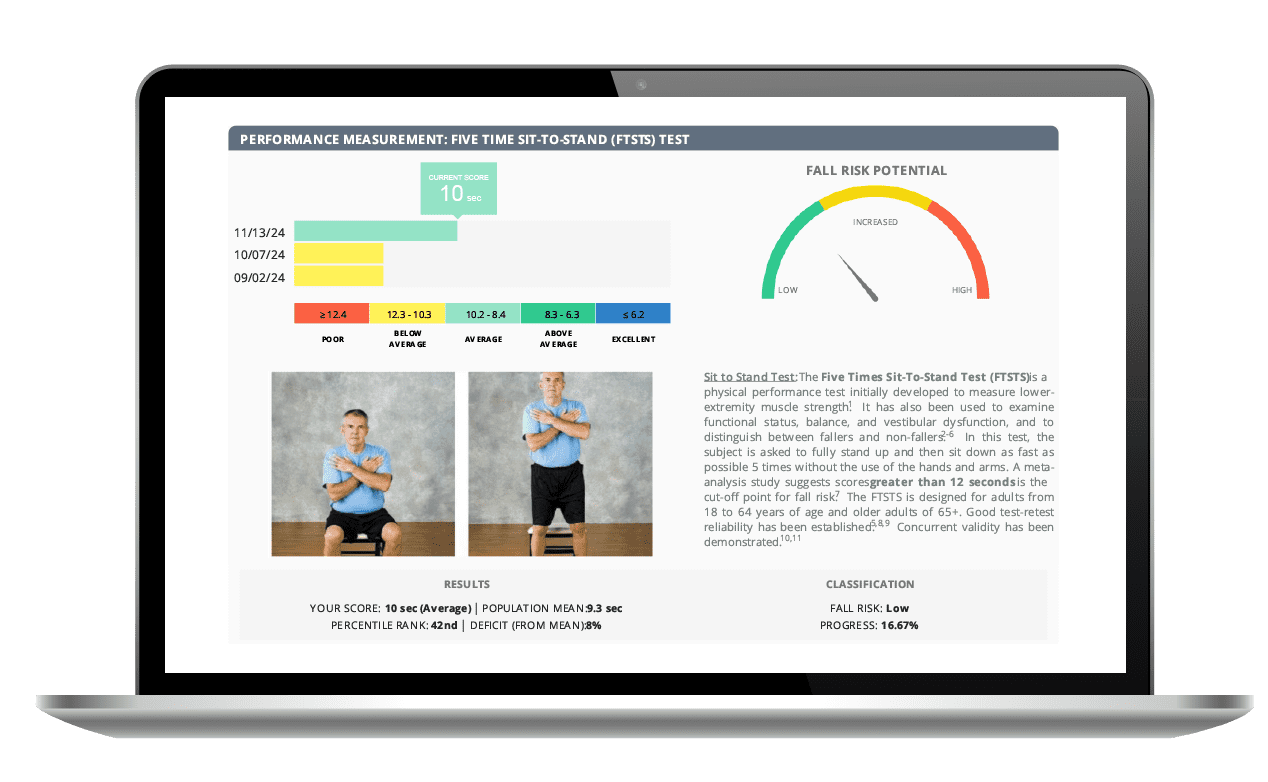
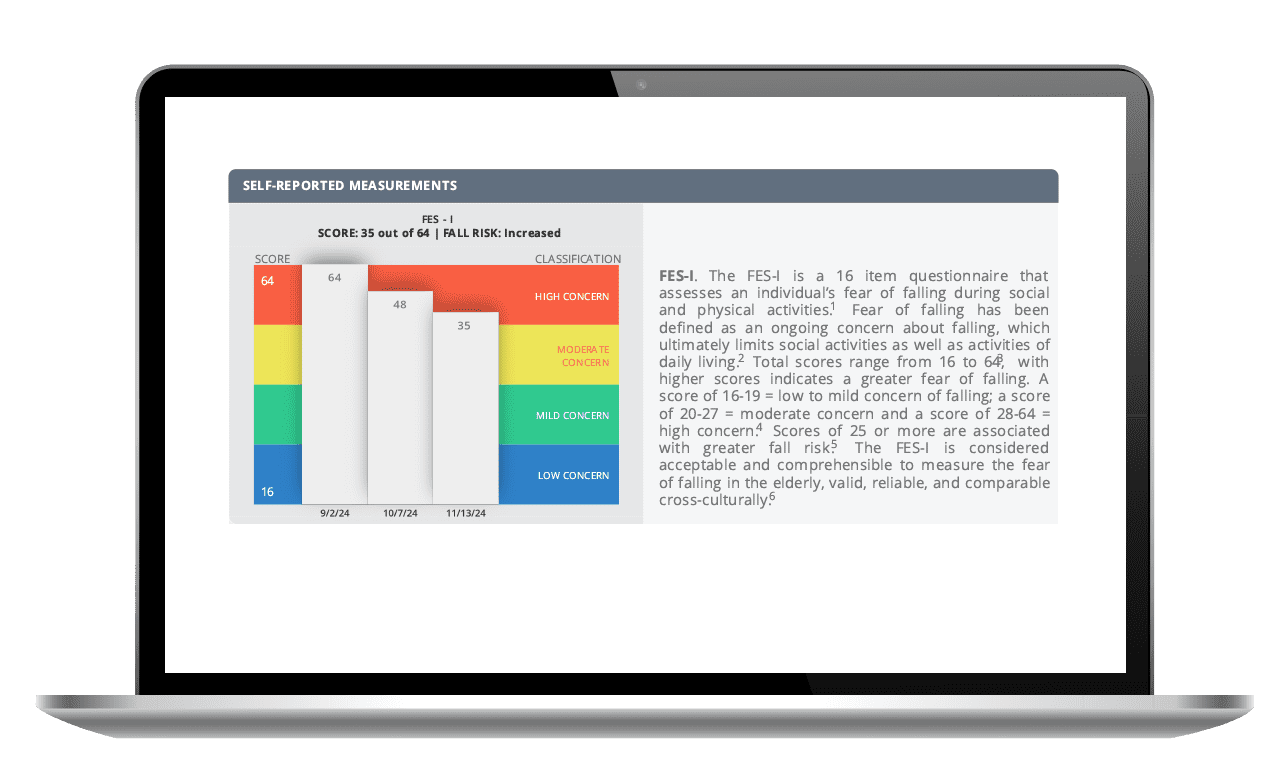
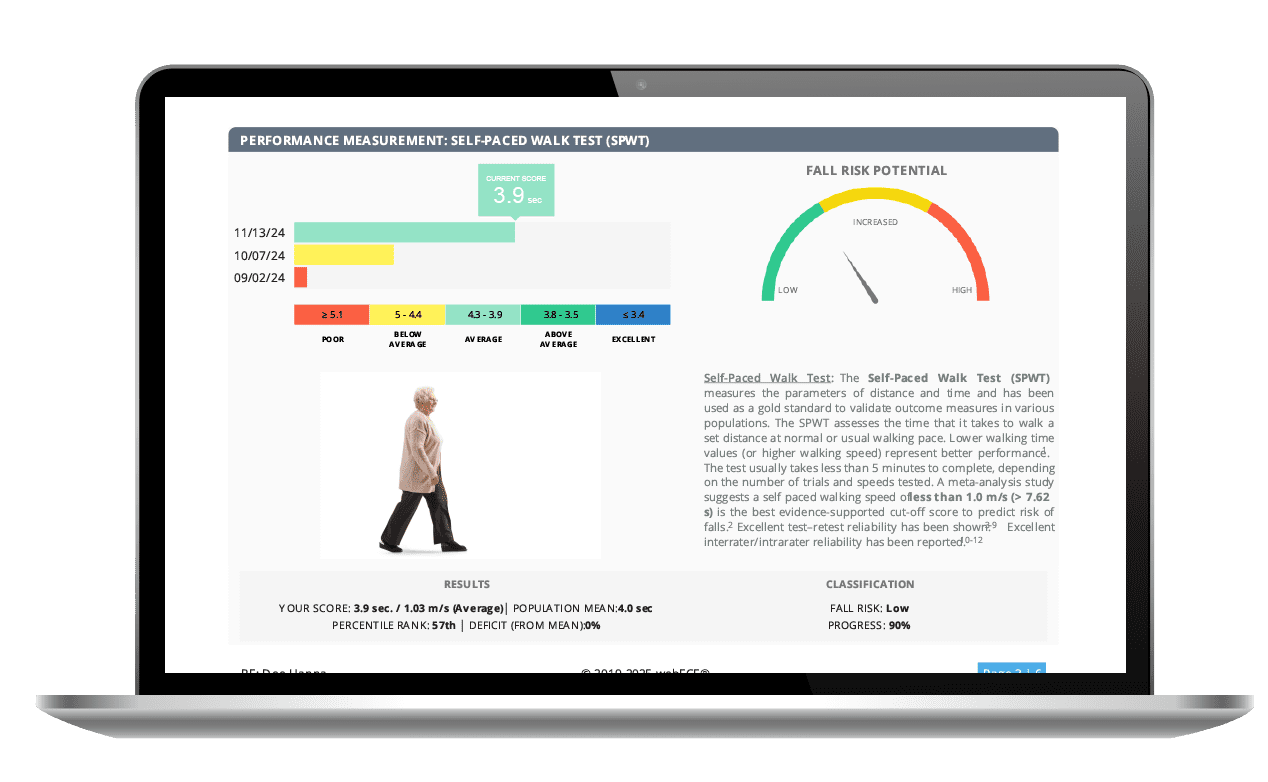
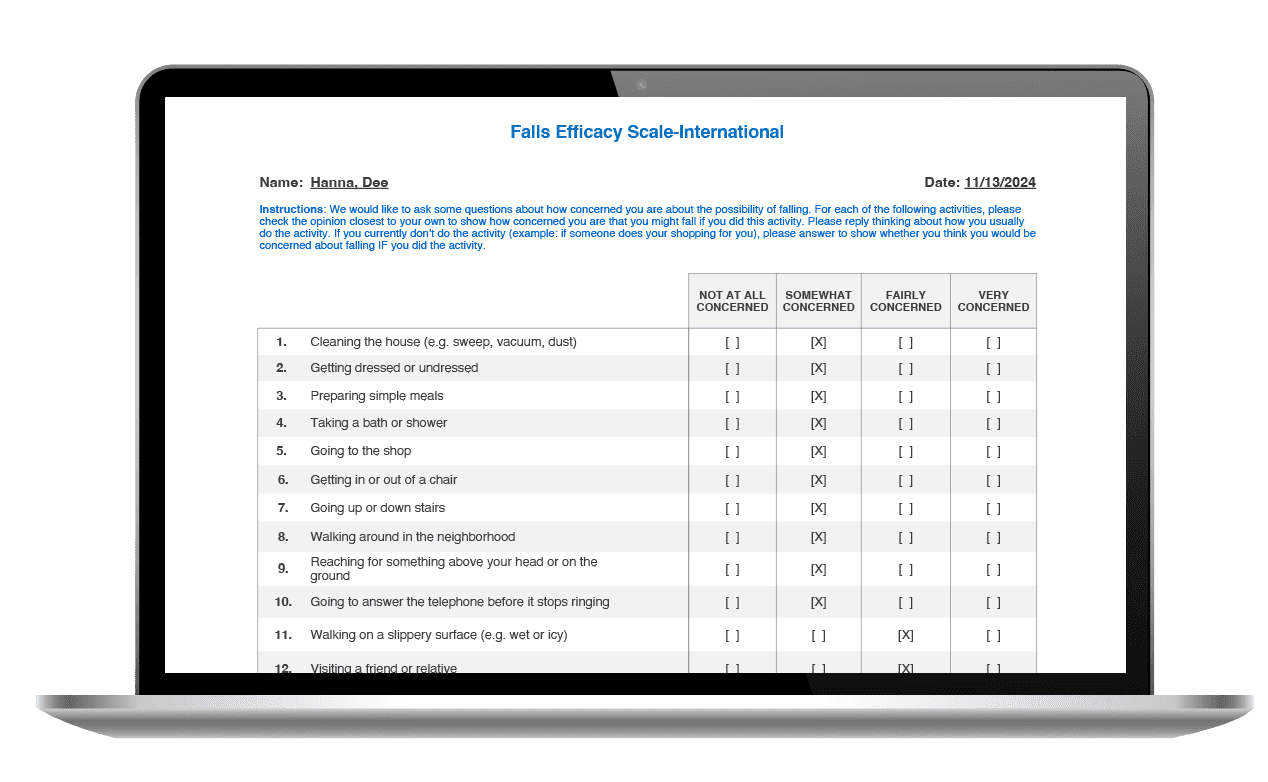
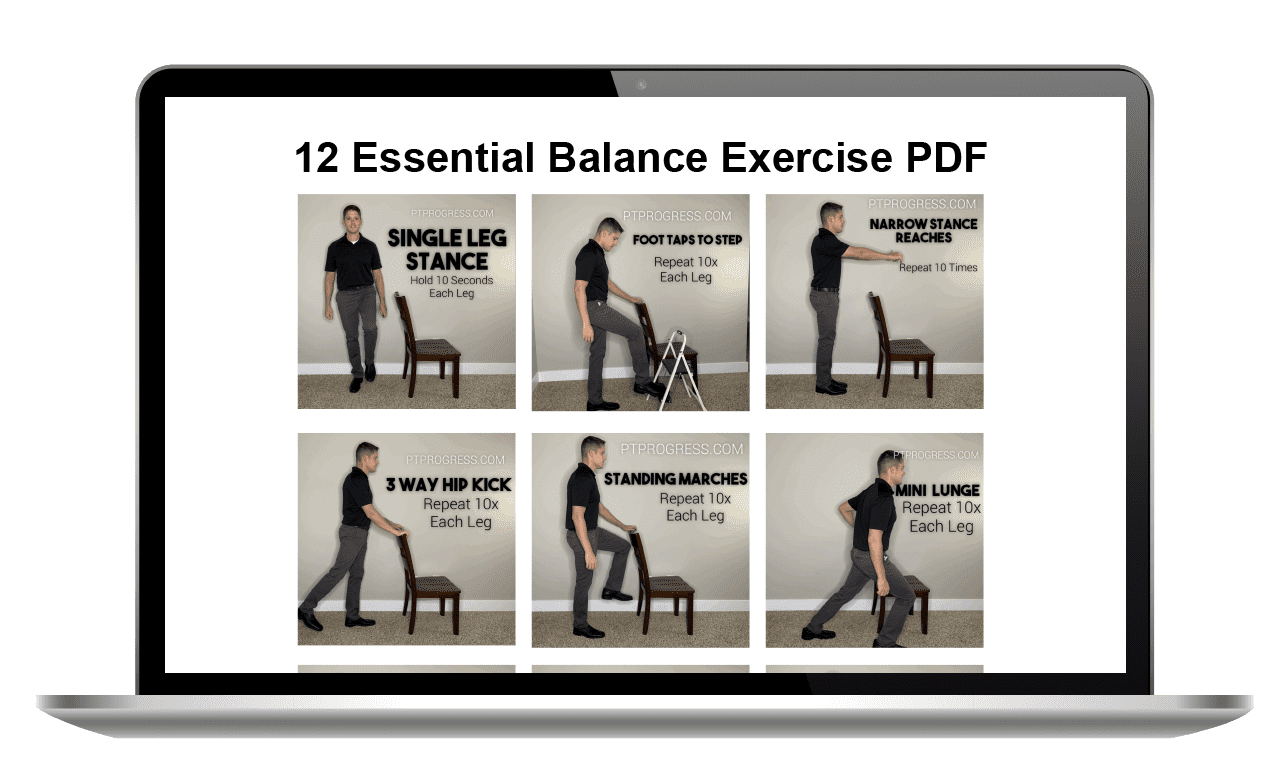
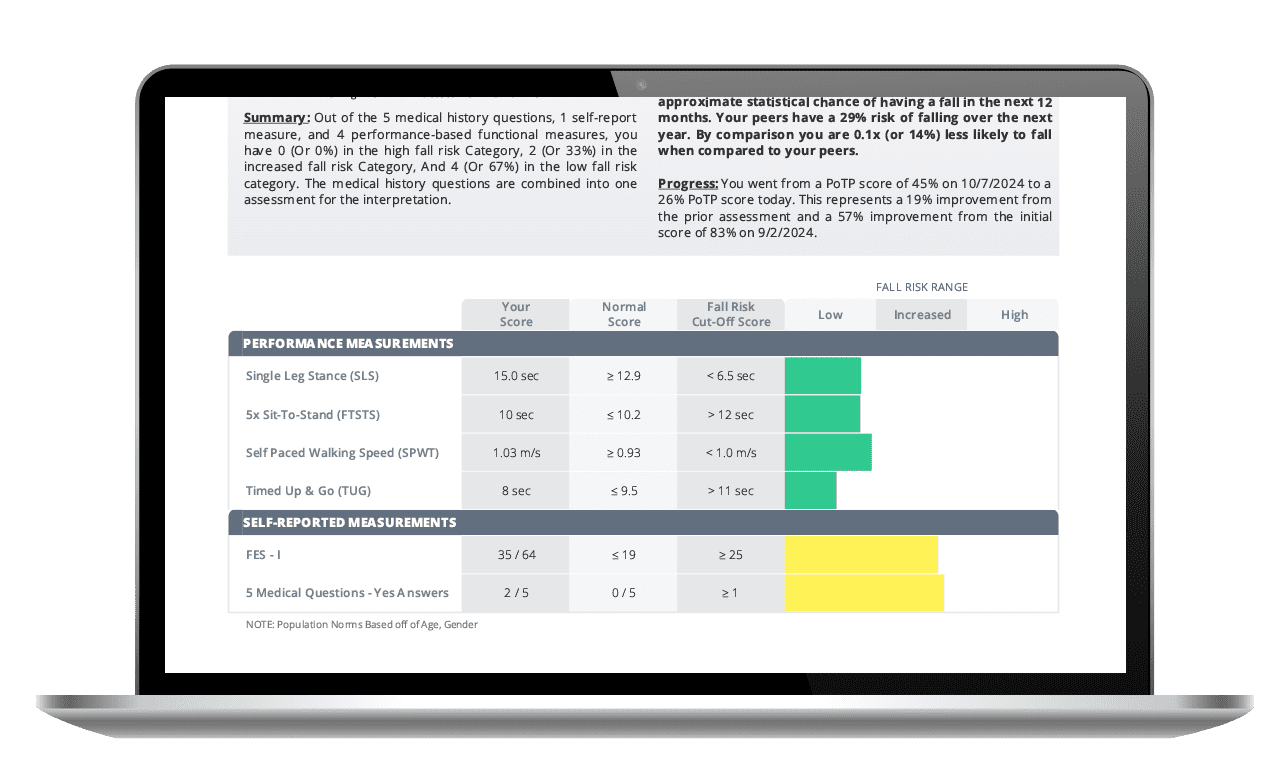
The patient completes two validated questionnaires—the Fall Efficacy Scale (FES-I) to assess concerns about falling and the Geriatric Depression Scale (GDS-15) to screen for depression. Following this, clinicians conduct five standardized mobility and balance tests, including the 5x Sit to Stand, Timed Up & Go, Single Leg Stance, Self-Paced Walking Speed, and the Berg Balance Scale. Together, these measures provide a comprehensive picture of both psychological and physical contributors to fall risk.

Step 2. Complete Questionnaires and Performance Tests

The patient completes two validated questionnaires—the Fall Efficacy Scale (FES-I) to assess concerns about falling and the Geriatric Depression Scale (GDS-15) to screen for depression. Following this, clinicians conduct five standardized mobility and balance tests, including the 5x Sit to Stand, Timed Up & Go, Single Leg Stance, Self-Paced Walking Speed, and the Berg Balance Scale. Together, these measures provide a comprehensive picture of both psychological and physical contributors to fall risk.

Image
Image

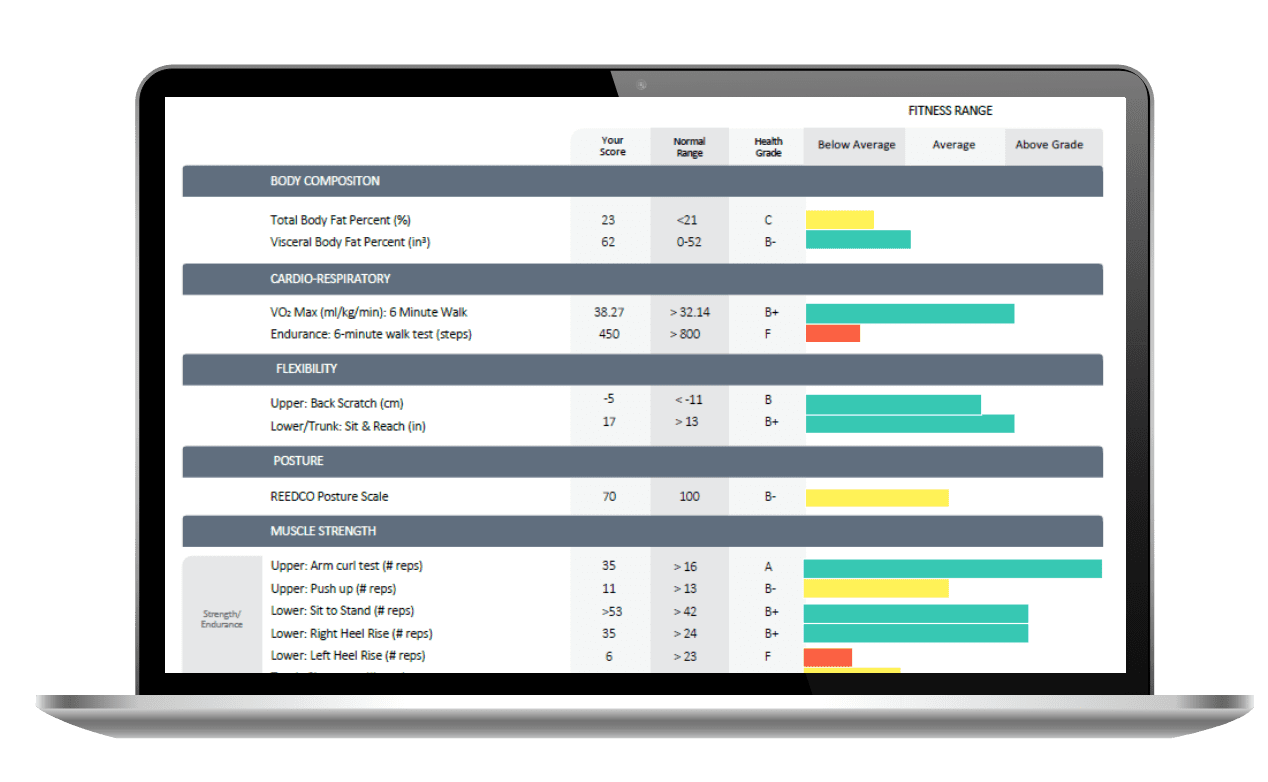
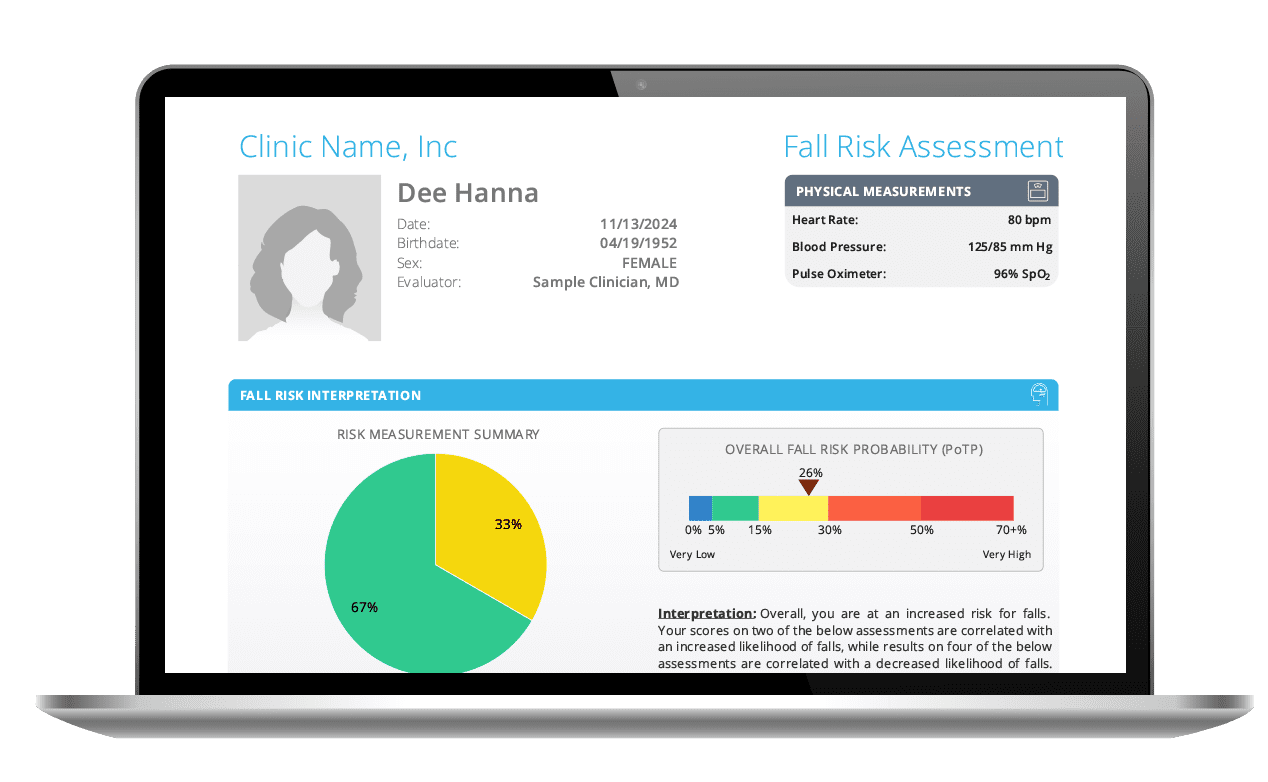
Step 3. Instantly Generate a Risk Report

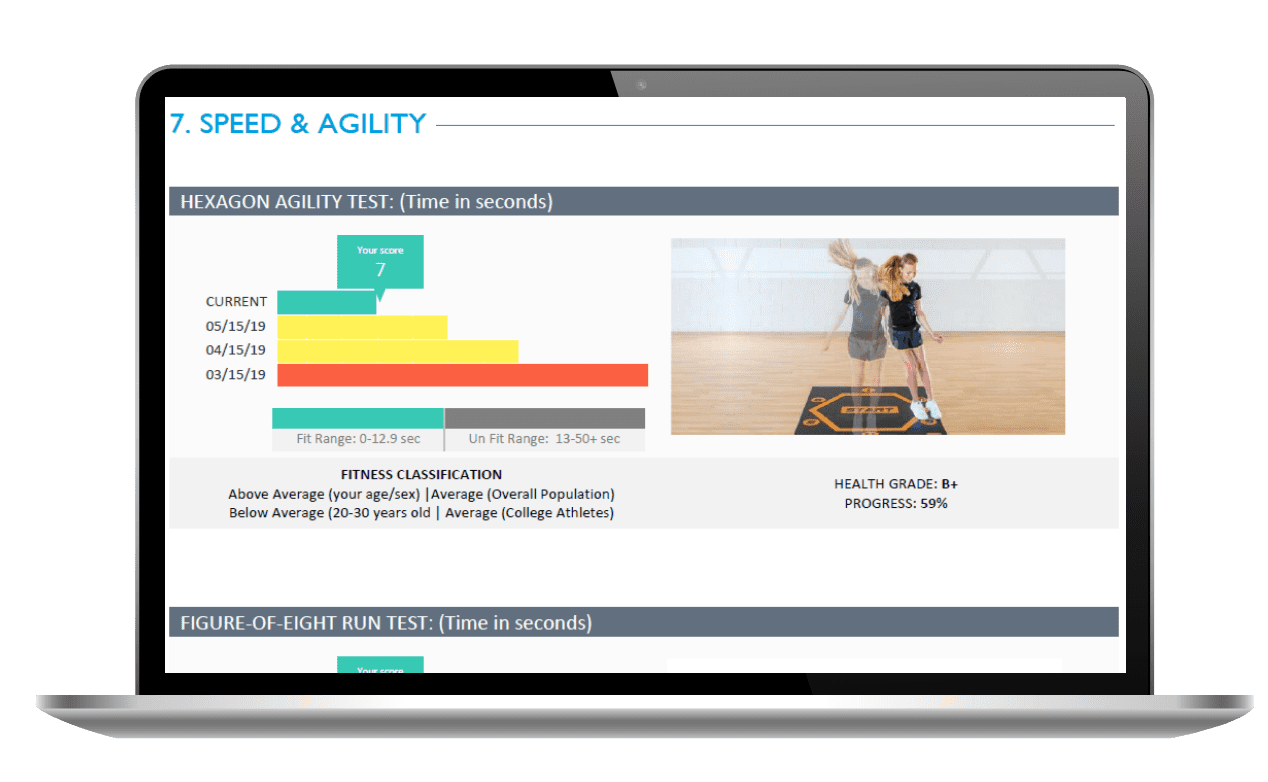
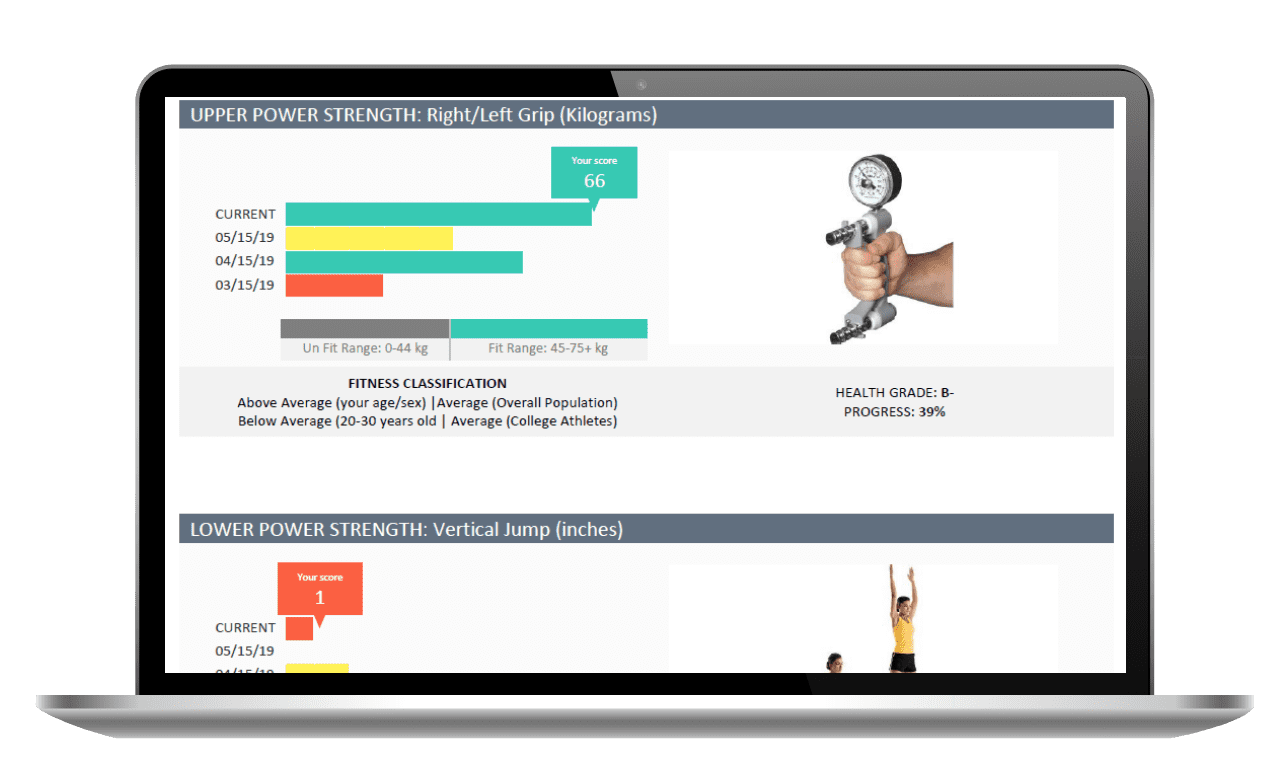
AccuHealth’s software analyzes all collected data using advanced probability calculations to determine an overall risk score and stratified estimate of future fall risk. Results are available immediately for download, printing, or integration into patient records, giving clinicians actionable insights to guide targeted prevention strategies.

Image

Step 3. Instantly Generate a Risk Report

AccuHealth’s software analyzes all collected data using advanced probability calculations to determine an overall risk score and stratified estimate of future fall risk. Results are available immediately for download, printing, or integration into patient records, giving clinicians actionable insights to guide targeted prevention strategies.

New Insights Into Predicting Fall Risk

Why the AccuHealth Fall Risk Assessment Stands Apart

The AccuHealth Fall Risk Assessment (FRA) is built on 12 validated evaluation tools that together provide a highly accurate estimate of an individual’s likelihood of falling. These tools were chosen based on findings from thousands of published studies, including more than 2,200 research articles on fall risk¹ and over 12,700 datasets on population norms². By applying advanced statistical modeling³, each assessment generates a probability of future falls. When combined, the full set of tools produces a cumulative probability score, giving clinicians a reliable 12-month forecast of fall risk across a range of populations—from young adults to seniors.

Research-Backed

Built on thousands of studies and systematic reviews.

Holistic Measures

Blends self-reports, history, and performance tests.

Precision Analytics

Uses advanced probability math for accurate risk.

Norm-Based

Benchmarked against age- and gender-specific norms.

Action-Ready

Instantly generates tracking, goals, & interventions.

New Insights Into Predicting Fall Risk

Why the AccuHealth FRA Stands Apart

The AccuHealth Fall Risk Assessment (FRA) is built on 12 validated evaluation tools that together provide a highly accurate estimate of an individual’s likelihood of falling. These tools were chosen based on findings from thousands of published studies, including more than 2,200 research articles on fall risk and over 12,700 datasets on population norms. By applying advanced statistical modeling, each assessment generates a probability of future falls. When combined, the full set of tools produces a cumulative probability score, giving clinicians a reliable 12-month forecast of fall risk across a range of populations—from young adults to seniors.

Research-Backed

Built on thousands of studies and systematic reviews.

Holistic Measures

Blends self-reports, history, and performance tests.

Precision Analytics

Uses advanced probability math for accurate risk.

Norm-Based

Benchmarked against age- and gender-specific norms.

Action-Ready

Instantly generates tracking, goals, & interventions.

From Assessment to Action in Minutes!

Generate precise, clinician-grade reports instantly—and transform results into tailored care plans that reduce fall risk and support safer, stronger outcomes.
Safer Seniors, Stronger Practices, Proven Results

Partnering healthcare professionals with senior care facilities creates a powerful continuum of care. Clinicians bring evidence-based assessments and personalized interventions directly into the senior living environment, while facilities gain objective tools to enhance safety and wellness programs. Seniors benefit most—receiving proactive, coordinated support that reduces risk, promotes independence, and improves quality of life. For providers, offering fall risk assessments not only elevates care quality but also creates a valuable service line that supports practice growth and sustainability. The result is a win for patients, providers, and facilities alike.

Smarter Clinical Decisions


Objective data supports precise treatment planning, defensible documentation, and better patient outcomes.

Practice Growth Made Simple


Generate new revenue streams with reimbursable, evidence-based assessments.

Retain and Re-engage Patients


Objective results encourage repeat visits and ongoing care plans.

Proven Population Impact


Evidence-based assessments improve community health while strengthening provider–patient trust.

Boost Facility Value


Senior care settings gain a competitive edge with proactive safety programs.

Empowered Seniors


Clear insights help older adults understand their risks, stay independent, and take proactive steps toward safety.

Stronger Healthcare Systems


Reduced fall-related admissions lower costs and align with value-based care initiatives⁴.

System-Wide Savings


Fewer fall-related hospitalizations mean reduced costs and improved population health outcomes⁴.

Reducing Falls, Lowering Costs, Improving Outcomes

Fall Risk Assessments provide measurable benefits for clinicians, seniors, and the healthcare system. Clinicians gain objective, evidence-based insights that support precise treatment planning and documentation. Seniors receive a clearer understanding of their strengths and vulnerabilities, empowering them to take proactive steps toward independence and safety. At the system level, these assessments help reduce costly fall-related hospitalizations, improve population health outcomes, and support value-based care initiatives⁴. Together, they transform fall prevention from guesswork into a structured, measurable strategy.

0

Falls among older adults 65 and older caused over 34,000 deaths in 2019, making it the leading cause of death for that group⁵.

0 Million

In 2019, the emergency department recorded 3 million visits for older adult falls5.

$0 Billion

Older adult falls cost $50 billion in medical costs annually, with ¾ paid by Medicare and Medicaid5.

FAQ

References:
1. Lusardi et al. (2017) — systematic review, foundation for 12 tools.
2. Shumway-Cook et al. (2009) — population norms and probability modeling.
3. Hagan et al. (2016) — statistical approaches (post-test probability).
4. CMS MIPS #155 — policy/quality reporting.
5. CDC & peer-reviewed sources (Bergen 2016; Florence 2018) — falls, ED visits, mortality, costs.